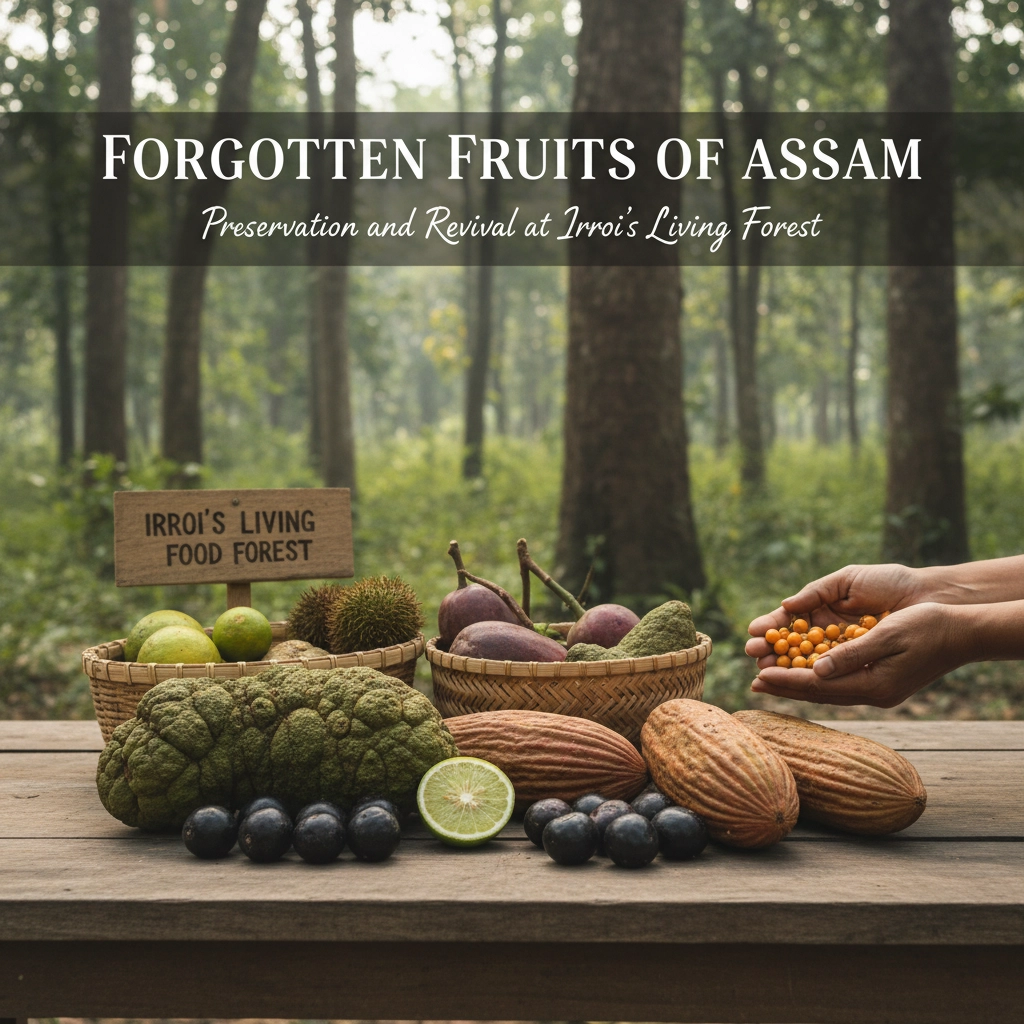
In the heart of Assam, where the Brahmaputra weaves its eternal story through emerald landscapes, there exists a treasure trove of flavors that time nearly forgot. These are not the fruits that grace modern markets or fill supermarket shelves. These are the forgotten fruits of our ancestors: wild, untamed, and deeply rooted in the cultural consciousness of a land that has always understood the sacred relationship between soil and sustenance.
At Irroi Kaziranga, we have taken it upon ourselves to become guardians of this disappearing legacy. Our Baari: a living, breathing food forest: stands as more than just an agricultural experiment. It is a sanctuary where endangered flavors find refuge, where traditional knowledge meets regenerative practice, and where guests can taste the very essence of Assam's culinary soul.
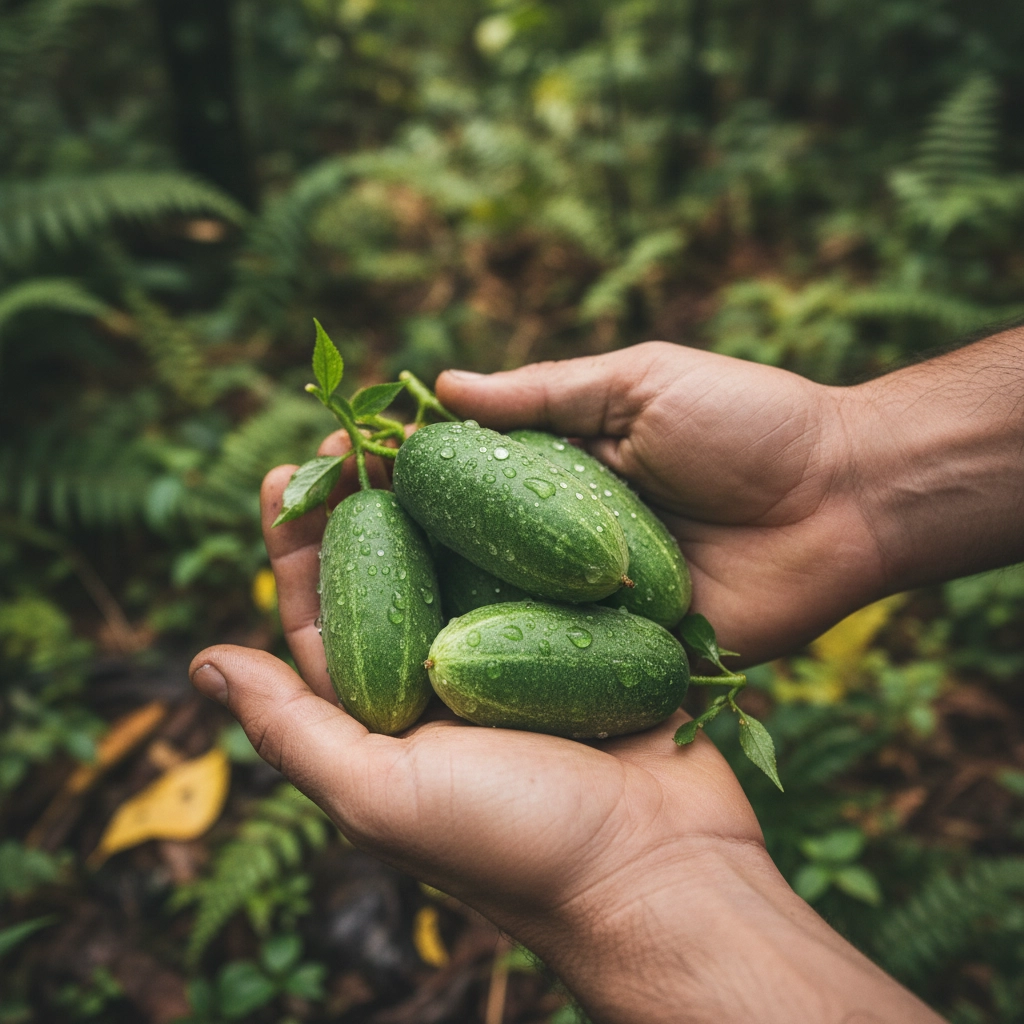
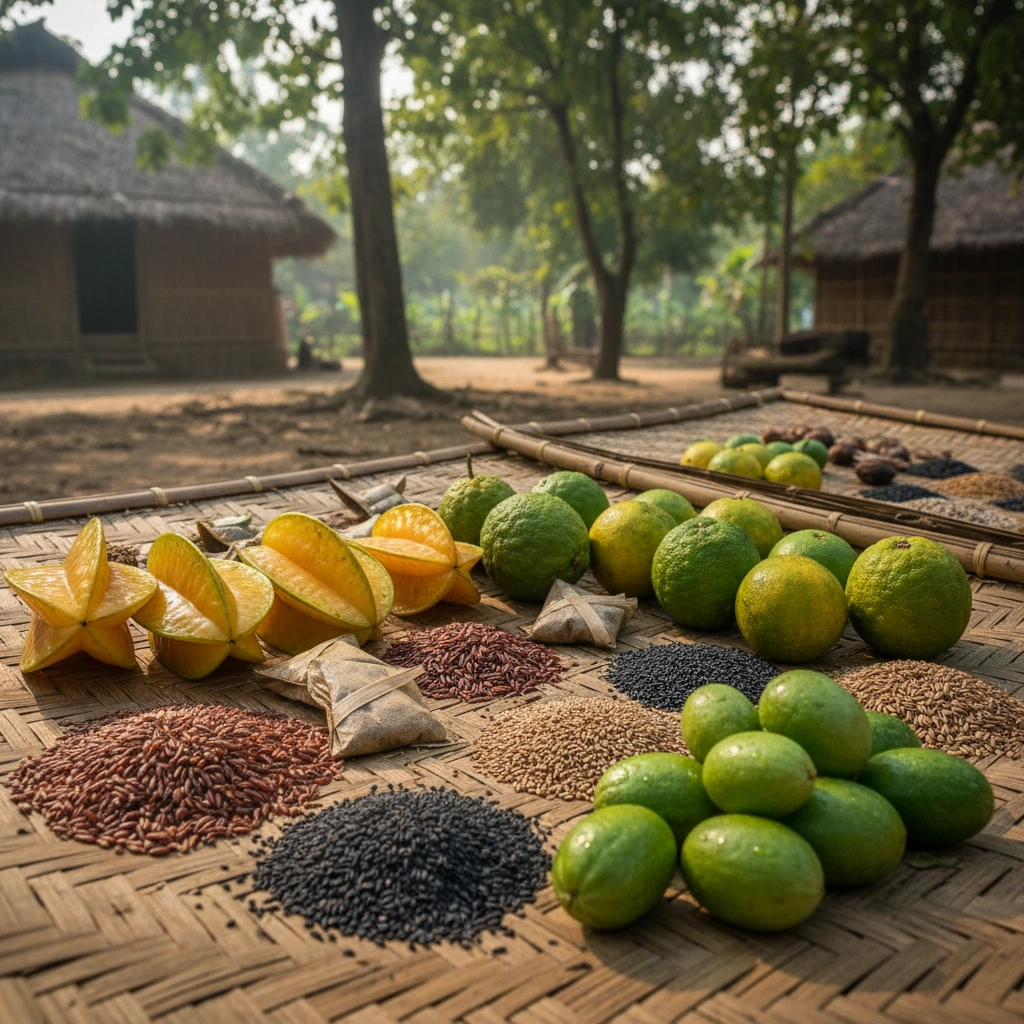
Dhunduli, with its emerald skin and tart embrace, once graced every Assamese kitchen during the monsoon months. This small, cucumber-like fruit carries within it the memory of countless family recipes, its acidic bite perfectly balancing the richness of traditional fish curries. Yet today, few recognize its name, fewer still its taste.
Kunduli, the forest's own offering of sweetness, ripens in clusters that hang like nature's chandeliers from towering trees. Its honey-like flesh once provided sustenance to both wildlife and wandering souls who understood the forest's generosity. In our Baari, we have recreated the conditions where Kunduli thrives: not in isolated orchards, but within a complex ecosystem that mirrors its natural habitat.
The Leteku tells perhaps the most poignant story of all. This wild lemon's ancestor, with its thick, bumpy skin and intensely aromatic oils, was the foundation of Assamese medicine and cuisine long before globalization homogenized our palates. Each Leteku tree in our food forest represents a direct lineage to those ancient groves, their DNA carrying forward thousands of years of adaptation to Assam's unique soil and climate.
Omora Tenga: the elephant apple: embodies the wild abundance that once defined this region. Its massive fruits, weighing sometimes over a kilogram each, provided sustenance not just to the gentle giants that gave it its name, but to entire communities who understood how to transform its astringent flesh into delectable preserves and chutneys. At Irroi, we witness daily how our rescued elephants from the nearby Kaziranga National Park instinctively seek out these fruits, their ancient memory intact despite human interference.
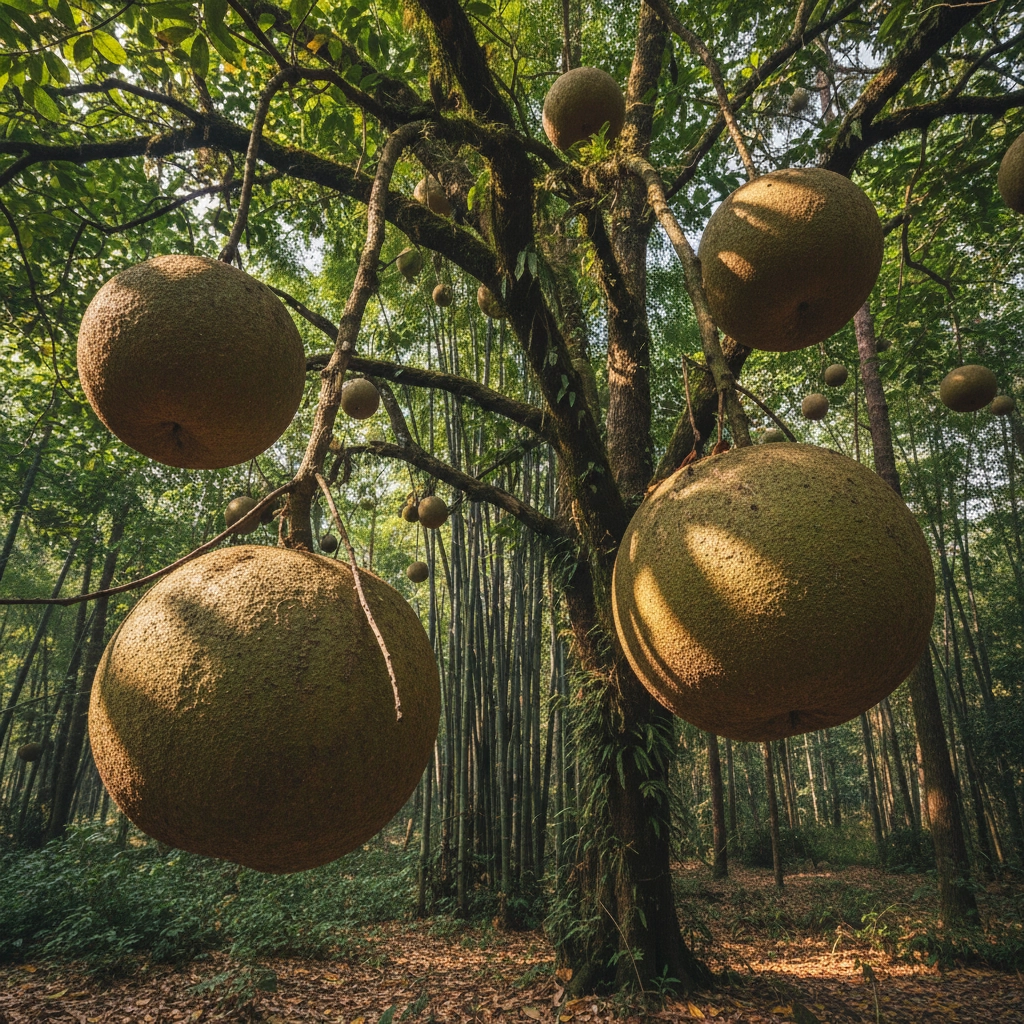
Star fruit, or carambola as it's known locally, grows in our Baari not in neat rows but in wild abundance, its star-shaped cross-sections reminding us that nature's geometry surpasses any human design. These trees, some over fifty years old, were transplanted from abandoned homesteads where families had migrated to cities, leaving behind not just houses but entire ecosystems of flavor.
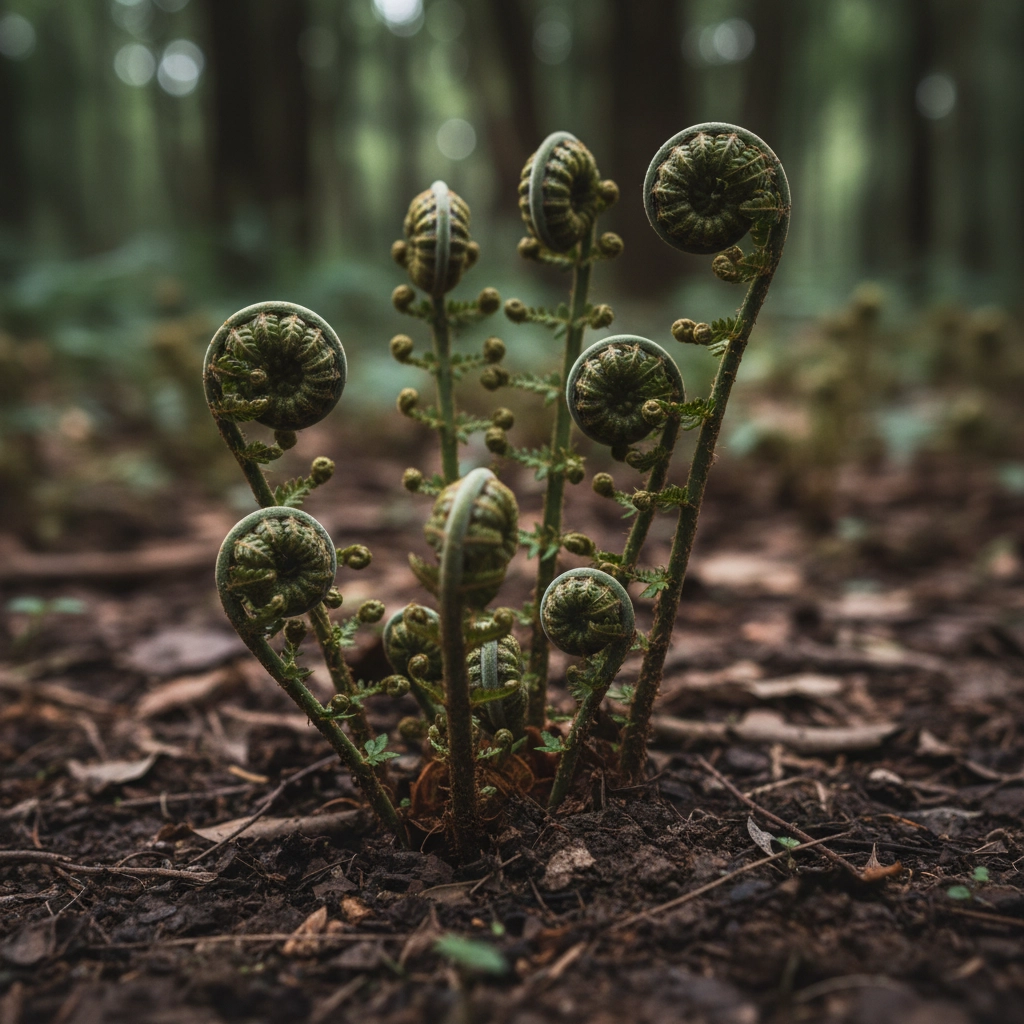
The fiddlehead ferns: locally called dhekia: represent perhaps our most ambitious conservation effort. These delicate spirals, unfurling like nature's calligraphy, require specific moisture conditions and soil composition. In our food forest, we have recreated the understory environment where they flourish, protected by larger canopy trees and sustained by the same mycorrhizal networks that would support them in wild forests.
Our Baari at Irroi Kaziranga extends across twelve acres of carefully orchestrated wilderness. This is not farming as most understand it, but rather permaculture in its truest form: a system where every plant, every tree, every creeping vine serves multiple purposes within a greater ecological symphony.
Here, agrotourism transcends the typical orchard walk or herb garden tour. Guests don't merely observe; they participate in the ancient art of reading the forest. They learn to identify the subtle signs that indicate when a Dhunduli is perfectly ripe, or how the morning dew on fiddlehead ferns reveals the optimal harvesting moment.
The food forest operates on seven distinct layers, each playing its role in supporting the others. The canopy layer, dominated by native hardwoods and bamboo groves, provides the microclimate necessary for the understory fruits to thrive. Below, the shrub layer hosts our rescued citrus varieties, while the herbaceous layer nurtures the wild greens and medicinal plants that form the foundation of traditional Assamese cuisine.
Every morning in our Baari, the day begins not with machinery but with observation. Our in-house naturalists: many of whom learned their craft from grandparents who never forgot the old ways: guide guests through sensory experiences that awaken dormant connections to the land.
The composting systems that feed our food forest rely entirely on organic matter generated within our resort ecosystem. Kitchen scraps, fallen leaves, and organic waste from our spa treatments all return to the soil through carefully managed decomposition cycles. This closed-loop system ensures that nothing is wasted, everything is valued, and the soil grows richer with each passing season.
Indigenous seed preservation forms the cornerstone of our conservation efforts. In temperature-controlled storage areas, we maintain genetic libraries of forgotten varieties: not just the fruits themselves, but the dozens of wild herbs, traditional vegetables, and grain varieties that once formed the backbone of Assamese food security.
At Irroi, we understand that true eco-luxury lies not in isolation from nature but in intimate connection with it. Our guests participate in seasonal harvesting ceremonies, learning the proper protocols for gathering wild foods that have sustained communities for millennia. These are not performances but genuine cultural transmissions, guided by elders who carry forward ancestral knowledge.
The culinary journeys that emerge from our Baari transform simple ingredients into profound experiences. Our chefs work exclusively with what the forest provides, creating menus that change not by whim but by season, by rainfall, by the subtle rhythms that govern all wild things. A single meal might feature seven different varieties of forgotten fruits, each prepared according to traditional methods that highlight rather than mask their unique characteristics.
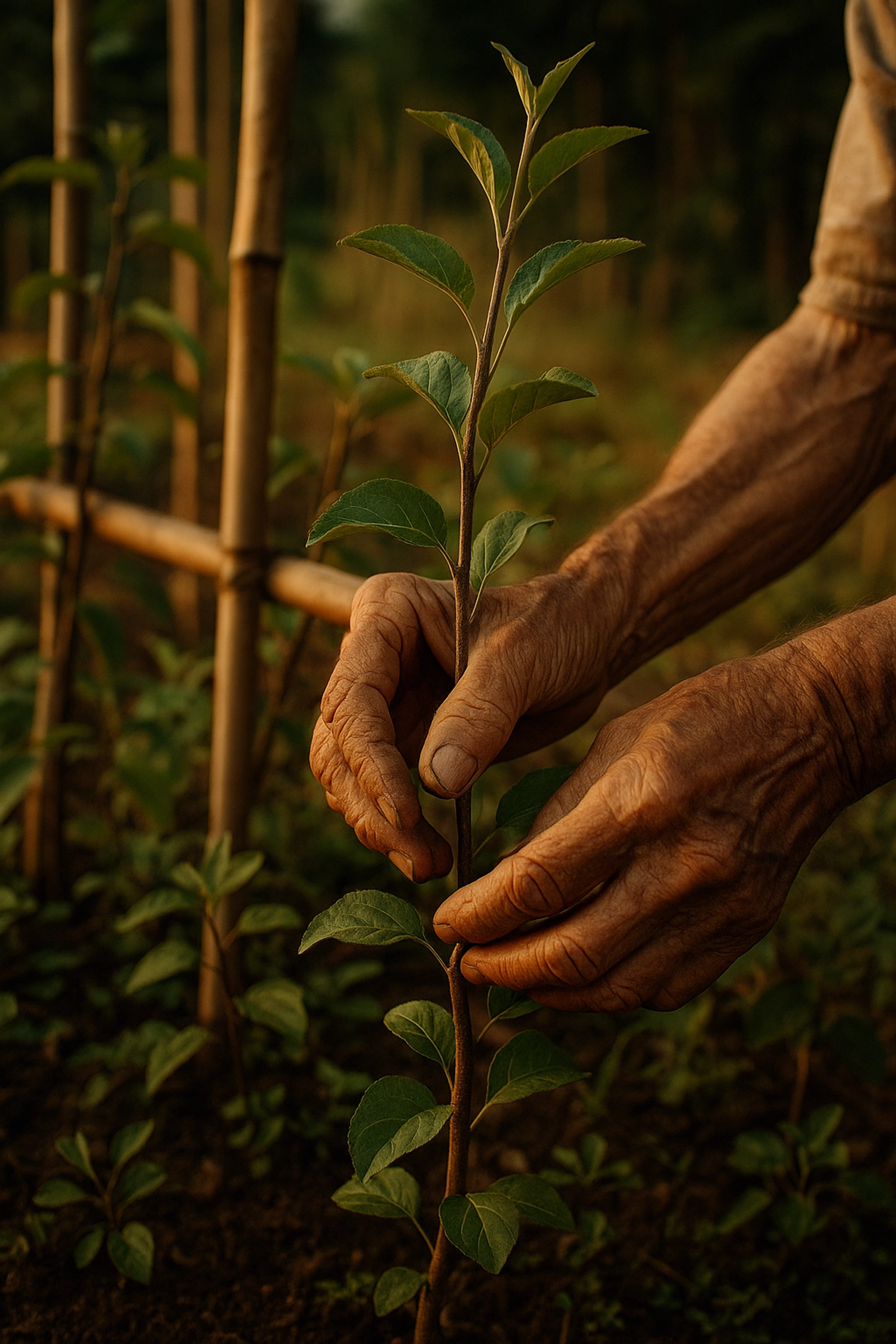
Our Kaziranga boutique resort serves as more than a luxury retreat; it functions as a cultural repository where the wisdom of Assam's agricultural ancestors finds new expression. The agrotourism Assam that we pioneer here involves guests in genuine conservation work: collecting seeds, propagating endangered varieties, and learning traditional processing techniques that extend the forest's abundance throughout the year.
Young visitors often experience profound moments of recognition when tasting these forgotten fruits for the first time. In their DNA, carried forward through generations, lies the memory of these flavors. The sharp tang of Omora Tenga, the delicate sweetness of ripe Kunduli, the complex astringency of wild Leteku: these tastes awaken something deep and ancient, a connection to place that modern life often severs.
As guardians of this living food forest, we at Irroi Kaziranga commit ourselves not just to preservation but to evolution. Our Baari serves as a research station where traditional knowledge meets contemporary understanding of soil science, plant breeding, and ecosystem management.
The future we envision extends far beyond our resort boundaries. Through our seed-sharing programs and educational initiatives, we distribute both genetic material and knowledge to communities throughout Northeast India. Every forgotten fruit that finds new life in a village garden, every traditional recipe that returns to a family kitchen, represents a victory against the homogenization that threatens to erase our culinary heritage.
In this eco-luxury Kaziranga experience, guests don't simply consume; they participate in a larger story of regeneration and renewal. They return home carrying more than memories: they carry seeds, recipes, and a deeper understanding of what it means to be connected to the land that feeds us.
The forgotten fruits of Assam are forgotten no more. In our Baari, they have found not just survival but celebration, not just preservation but renaissance. Here, every taste carries forward the wisdom of countless generations, every harvest honors the sacred covenant between human and earth that defines true luxury: the luxury of belonging to something greater than ourselves.

.jpeg)


