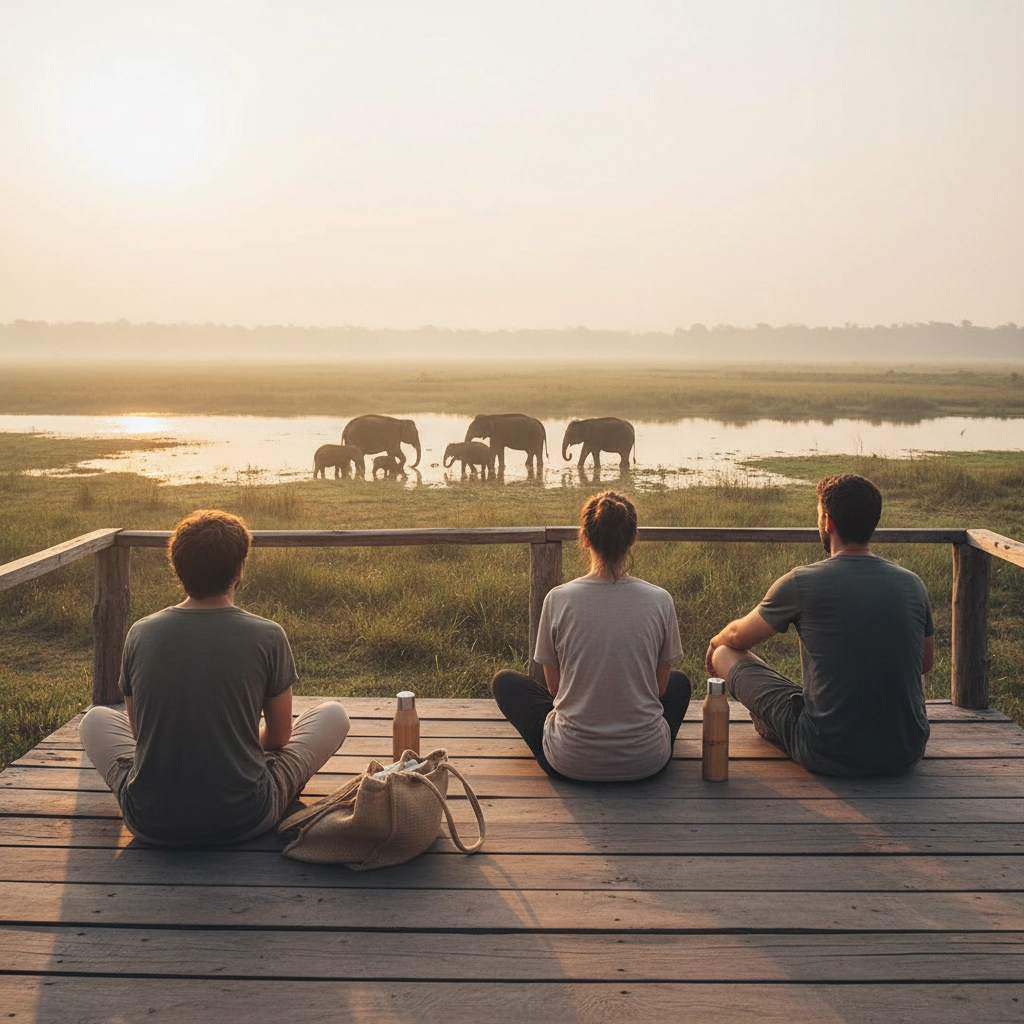
In the heart of Assam, where the Brahmaputra's ancient waters carve stories into fertile flood plains, lies a sanctuary that holds within its grasslands the very essence of what it means to belong to this earth. Kaziranga National Park: a UNESCO World Heritage Site: whispers the names of one-horned rhinoceros, wild elephants, and countless species that have called these lands home for millennia.
To walk among such majesty is a privilege. To do so without leaving a trace? That is reverence made manifest.
Where every footstep matters
The indigenous communities of Assam have understood for generations what modern conservation science now echoes: we are but temporary guests in spaces that belong to the wild. Their traditional practices of ahimsa: non-violence toward all living beings: form the philosophical foundation upon which true zero-waste safari experiences are built.
Kaziranga's 430 square kilometers encompass not just protected wilderness, but a living testament to the delicate dance between human presence and natural preservation. Here, the world's largest population of one-horned rhinoceros roams freely, while Bengal tigers move like shadows through tall elephant grass, and over 480 bird species paint the sky with their ancient songs.
The sacred nature of this place demands that we arrive not as conquerors, but as conscious witnesses.
Preparation as ritual
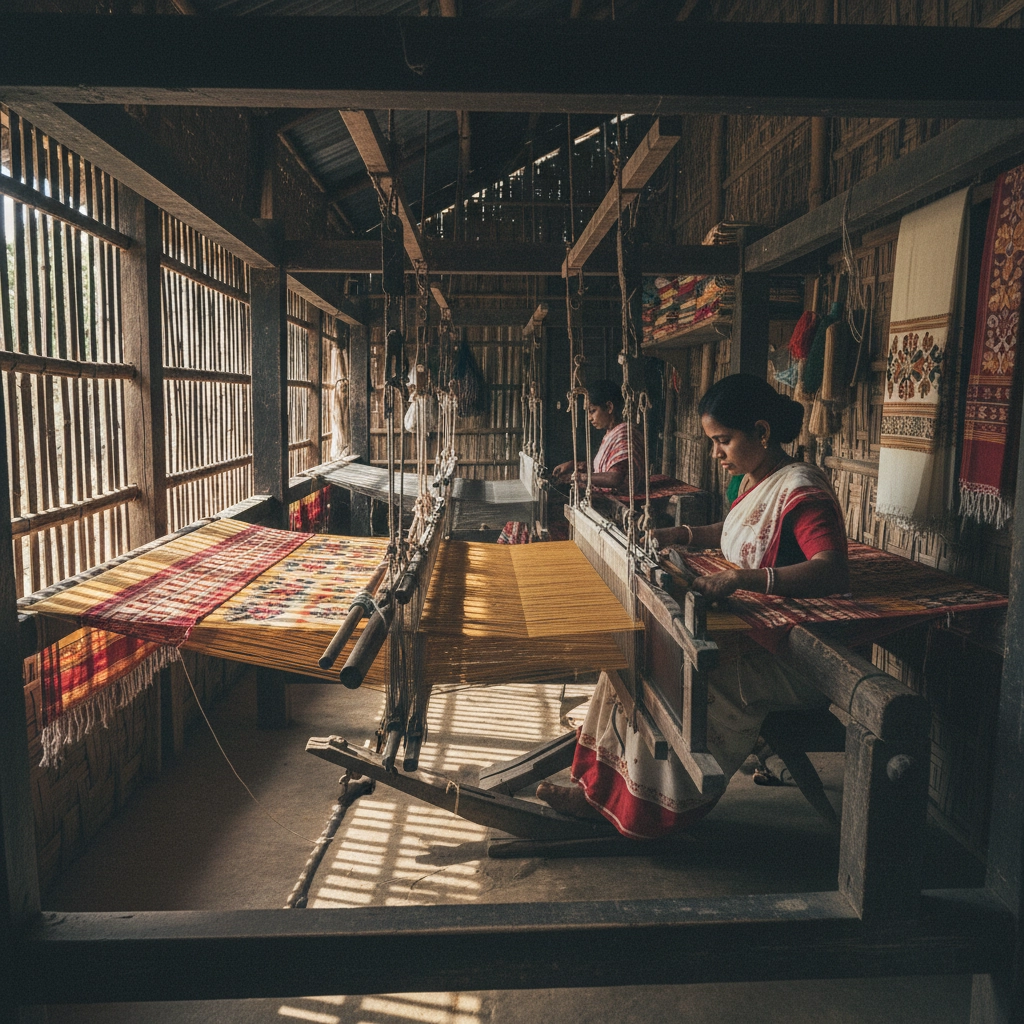
The journey toward zero-waste safari begins not at Kaziranga's gates, but in the sacred act of mindful preparation. Traditional gamusa cloth: woven by Assamese artisans: replaces plastic bags. Reusable bamboo utensils, crafted by local communities, honor both the land's resources and its people's craftsmanship.
Your traveling companions become carefully chosen allies in this commitment:
The guide's trained ear catches the warning calls of langurs, signaling tiger movement through the undergrowth. The subtle trumpet of elephants at watering holes. The distinctive calls of hornbills that announce the awakening forest. These audio cues become your roadmap to meaningful encounters that require no disturbance, no intrusion upon the daily rhythms of wild lives.
The principle is simple, yet profound: carry in, carry out. What you bring into Kaziranga's sacred spaces returns with you to the world beyond its boundaries.
Observation without intrusion
In the pre-dawn darkness, when morning mist rises from the Difalu River and elephant grass stands sentinel in the half-light, the true art of wildlife observation reveals itself. Local guides: inheritors of generations of forest wisdom: understand that spotting wildlife is not about the loudness of your approach, but the quietness of your presence.
Listen first. Move second. Wonder always.

Gypsy safaris allow deeper penetration into Kaziranga's wilder territories, while elephant-back journeys offer elevated perspectives through grasslands too tall for ground-level viewing. Jeep safaris provide access to denser forest areas where patient observation rewards travelers with glimpses of the park's more elusive residents.
Each mode of transport carries its own philosophy of minimal impact. The goal is not to get as close as possible, but to witness from a distance that honors both your safety and their sovereignty.
The practice of presence
Zero-waste safari extends far beyond what you pack or where you stay. It encompasses the very manner in which you move through these protected lands. Every step becomes an act of conscious choice.
Designated safari routes exist not as limitations, but as pathways that minimize habitat disruption while maximizing authentic wildlife encounters. Staying within these boundaries demonstrates respect for the complex ecosystem management that keeps Kaziranga thriving.
Silence becomes your greatest tool. The forest responds to patience, not persistence. To those who sit quietly by watering holes, who notice the rustle of grass that signals rhinoceros movement, who understand that the best wildlife photography happens when animals remain unaware of your presence: to these travelers, Kaziranga reveals her deepest secrets.
The waste you generate: however minimal: travels with you like sacred responsibility. No tissue left behind. No food scrap forgotten. No plastic wrapper overlooked. This practice transforms the simple act of cleanup into ceremony, an acknowledgment that our presence here is temporary, but our impact can be eternal.
Where accommodation becomes advocacy
The choice of where you rest your head each night becomes an extension of your commitment to zero-waste principles. Eco-luxury lodges surrounding Kaziranga have embraced this philosophy not as marketing strategy, but as moral imperative.
Diphlu River Lodge, positioned on the park's fringes, exemplifies this integration of comfort with conservation. Here, waste management systems transform potential environmental burden into opportunity for regeneration. Oxy-biodegradable plastics replace traditional alternatives. Toiletries come from bulk dispensers housed in handcrafted wooden vessels, eliminating single-use packaging entirely.
The luxury lies not in excess, but in the elegance of restraint.
These establishments channel their revenue streams directly into reforestation initiatives and wildlife protection programs. Your night's rest becomes investment in habitat preservation. Your meals support local farmers practicing sustainable agriculture within the park's buffer zones.
Community-based homestays offer even deeper cultural immersion, where traditional Assamese hospitality meets contemporary environmental consciousness. Here, solar cooking systems replace fossil fuels. Rainwater harvesting provides for daily needs. Waste becomes compost that nourishes gardens growing ingredients for your meals.
Impact that echoes
The true measure of a zero-waste safari lies not in what you experience during your stay, but in what ripples outward long after your departure. Each conscious choice: every reused container, every piece of carried-out waste, every respectful wildlife observation: contributes to a larger story of regenerative tourism.
Jungleciti House Resort and similar establishments organize guided eco-tours built upon "leave no trace" principles, creating experiences where luxury and environmental stewardship become indistinguishable. These initiatives demonstrate that premium travel experiences can enhance rather than diminish the very environments they showcase.

Your participation in these thoughtfully designed experiences supports local communities whose livelihoods depend upon Kaziranga's continued health. When tourism becomes tool for conservation rather than threat to it, everyone wins: wildlife, communities, and travelers alike.
The indigenous wisdom of Assam teaches that we are not separate from the natural world, but woven into its fabric. Zero-waste safari practices honor this understanding, creating space for meaningful encounter between human and non-human lives without compromising the integrity of either.
In Kaziranga's grasslands, where ancient rhinos continue their timeless wanderings and tigers maintain their secretive sovereignty, the question is not whether we can afford to travel responsibly. The question is whether we can afford not to.
The path forward lies in recognizing that true luxury is not about taking everything we want from a place, but about leaving it exactly as we found it: or perhaps, through our conscious choices and support for conservation initiatives, even better than we found it.
For the wildlife enthusiasts, cultural curators, and conscious travelers who understand that the greatest adventures leave the smallest footprints.

.jpeg)


